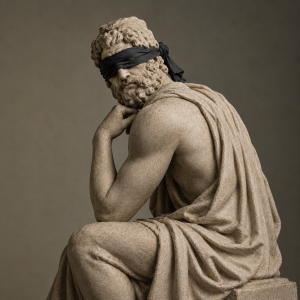
Philosophy in the Light of Ancient Wisdom

Preface
When you pick up any “Introduction to Philosophy” book, you will see that it is designed as an “introduction to philosophical issues.” In such works, the question “What is philosophy?” is posed at the outset, and a variety of trends, approaches, and names are discussed under topics such as “being,” “knowledge,” and “value.” By the end of the book, many schools of thought, trends, and names remain in your mind, yet the question “What is philosophy?” still hangs in the air, unanswered. Because in such works, the issue is not so much to examine what philosophy is, but rather to present certain philosophical problems.
However, in this work, as we discuss philosophical matters, we will also attempt to outline a framework for what philosophy is and reveal the foundational basis it rests upon.
**
The modern age has redefined all concepts that have emerged from humanity’s legacy. This situation necessitates a reevaluation of our understanding in the field of philosophy. While philosophical effort is a holistic endeavor concerning ontology, epistemology, ethics, and aesthetics, its importance and meaning have been narrowed by the paradigm that emphasizes scientificity.
Due to the influence of what is called modern philosophical understanding, the field of philosophy has remained in the shadow of scientific achievements. This has rendered it ineffective in addressing human existential concerns. The glorification of scientific success at the expense of philosophical endeavor has produced a kind of blindness toward the human condition.
Philosophical approaches presented within the framework of Western intellectual movements—especially ancient Greek and scholastic paradigms—have imposed a kind of philosophical hegemony that ignores the common heritage of humanity.
Introduction
Why is it that when most people hear the word “philosophy,” they immediately feel that it is a vague or obscure field? It can be said that this sense of vagueness often stems from associating philosophy with mental instability, irreligion, unbelief, or even atheism.
Moreover, when someone is referred to as a “philosopher,” it often evokes the image of strange individuals holding contrarian views and perspectives that go against societal norms.
In addition, people who are assumed to be involved in philosophy are often warned, “It’s not good to dig too deep.” This phrase “digging deep” corresponds to meaningless over-analyzing and excessive examination.
But is this so? Is philosophy truly about unnecessary details? Is it concerned with meaningless and trivial matters? Is it merely an exercise in intellectual chitchat?
The real question we need to address is: What is the source of the negative perceptions surrounding philosophy? Why does philosophy suffer from a legitimacy crisis, or what exactly is the nature of this supposed crisis?
Even those who defend philosophy tend to treat this “dangerous” label attached to it as if it were a real legitimacy issue.
Often, those engaged in philosophy themselves accept that it has a legitimacy problem and try to justify this with various arguments. As a result, the field known as philosophy is portrayed as inherently marginal, oppositional, and absurd.
But is this really the case?
When we look at the history of thought, it is hard to find much evidence for such a conclusion, except for a few extreme examples. I believe those who adopt this view of philosophy face serious contradictions in their philosophical stance. This outcome is mostly driven by ideological and historical interpretations.
Those who interpret history through “progressivist” and “class-conflict” lenses inevitably arrive at such conclusions. Thus, philosophy is approached not through a philosophical attitude, but through an ideological stance; the so-called legitimacy crisis of philosophy becomes not a philosophical evaluation, but an entirely ideological one.
Interpretations that see the essence of life as conflict inevitably portray the philosophical effort as conflicting with either the ruling political power or religion. According to such views, governance and authority are inherently bad, and opposition is inherently good. They claim that philosophers always fought with the existing system and opposed its representative approa ches, often equated with religion.
Such oversimplified and superficial evaluations cast a negative shadow on people’s view of philosophy.
Can such a view be considered a legitimate critique of philosophy? If so, how should we interpret the conflicts prophets and social reformers had with rulers?
Moreover, the claim that prominent philosophers clashed with religion is completely ideological and baseless. It is not meaningless that Socrates was referred to as “Divine Socrates.” Some viewed Socrates as a divine messenger. We know that certain thinkers of Ancient Greek philosophy opposed the anthropomorphic concept of the divine in Greek society and described God as a transcendent being. Many of the foundational ethical concepts in society were inherited from religious traditions. The concept of “virtue,” emphasized in the ethical philosophies of Plato and Aristotle, is an example.
Isolating philosophers and thinkers from society and portraying them as figures always in conflict with their communities and values is an elitist perspective. This view stems from an assumption that society is always in the wrong and that the philosopher is always in the right.
Those who want to perpetuate this view frequently cite Socrates’ execution as definitive proof. However, while some philosophers were persecuted by those in power, others fully benefited from the advantages of power. Reducing the execution of Socrates to mere hostility toward philosophy and enlightenment is inaccurate. Throughout history, many individuals were punished not only for their thoughts but for being different. This approach has nothing to do with philosophy’s so-called legitimacy crisis.
History is full of prophets and activists who were executed. Consider the crucifixion of Jesus or the persecution of those who resisted slavery. Framing Socrates’ punishment as a “legitimacy crisis of philosophy” only serves to marginalize philosophical efforts.
If what is called philosophy is seen as suspicious in every society, that is not a compliment to philosophy, but rather a negative condition. Those who approach the matter from a conflict-centered worldview unfortunately also see philosophy as a form of combat. But life is not merely a battlefield, nor does philosophy have a necessarily antagonistic ground.
Life is filled with problems and obstacles. Naturally, philosophy also operates within this context. But this difficulty arises not from philosophy itself, but from our attempt to understand life—from our existential curiosity.
Is life not a process of solving problems? Are not philosophy, religion, and science all ways that humans try to solve life’s problems? If philosophy is problematic, then so are religion and science.
Those who try to assign a task to philosophy according to their worldview end up turning it into a barren field. This is due to a fundamental misunderstanding of what philosophy is.
Therefore, we must begin by examining philosophy on a conceptual level.
Chapter I
Philosophy and Ḥikmah
Throughout history, the intellectual efforts of human beings have at times been labeled as “philosophy” and at other times as “ḥikmah.” But do philosophy and ḥikmah actually signify the same thing?
What is Philosophy?
Philosophy, in the classical sense, derives from the Greek words philo (love) and sophia (wisdom), and means “love of wisdom.” In the context of the order of being, wisdom is understood as “knowing the causes.”
Ḥikmah, on the other hand, rooted in the meanings of judgment and decision, refers to “presenting being as it truly is; unveiling it.” It means identifying the principles to which being is bound. A common assumption is that what distinguishes it from philosophy is its practical orientation—a view which can be considered problematic. After all, the philosophers of antiquity also emphasized the practical and moral dimensions of philosophy. For instance, in The Republic, Plato answers the question of what is required to attain knowledge of being with the following:
“To see it well, a person must have a natural memory, ease of learning, nobility of spirit, and refinement. One who is not a friend of truth, justice, courage, and moderation cannot succeed.”(Republic, trans. Eyüboğlu & Cimcoz, p. 174)
According to him, moral corruption in a person also leads to estrangement from philosophy.
This implies that for the early philosophers, the philosophical domain was not restricted to mere theory but also involved a kind of practical purification—virtue.
Wisdom (ḥikmah) is the ability to combine acquired knowledge with experience and an innate sense of understanding. It is the application of knowledge in a rational (logos-based) and logical way. One could also say that ḥikmah represents holistic judgment and perception.
The starting point of philosophical inquiry is to ask questions in pursuit of answers. These answers are to be found in the human being, in nature, and in history. This quest for understanding encompasses both theoretical and practical dimensions.
In this regard, ḥikmah includes both theory and practice. It is classified as theoretical ḥikmah (ḥikmah naẓariyyah) and practical ḥikmah (ḥikmah ʿamaliyyah).
Since the human being consists of both soul and body, it is natural that wisdom manifests in both dimensions.
____________________________________________________________________________
The book was published by
 TİRE BASIN YAYIN EĞİTİM VE ORG. SAN. TİC. LTD. ŞTİ
Akşemsettin Mahallesi, Halıcılar Caddesi, No: 72/A Fatih/İstanbul
About The Author